
Why Grading Is 90% of a Driveway That Lasts
People shop for asphalt by the inch — how thick is the mat, what's the price per foot. Fair enough. But the truth of this trade is that pavement doesn't fail from the top down. It fails from the bottom up, and the bottom is decided before the first truck of asphalt arrives.
Water always wins
Every pavement problem I've been called to look at in twenty years traces back, one way or another, to water. Water in the subgrade turns solid ground soft. Soft ground moves under load. Moving ground cracks whatever rides on it — two inches of asphalt or six, it doesn't care. The job of grading is to make sure water never gets to stay: cut to line, fall in the right directions, drainage where the site needs it.
The foundation you never see
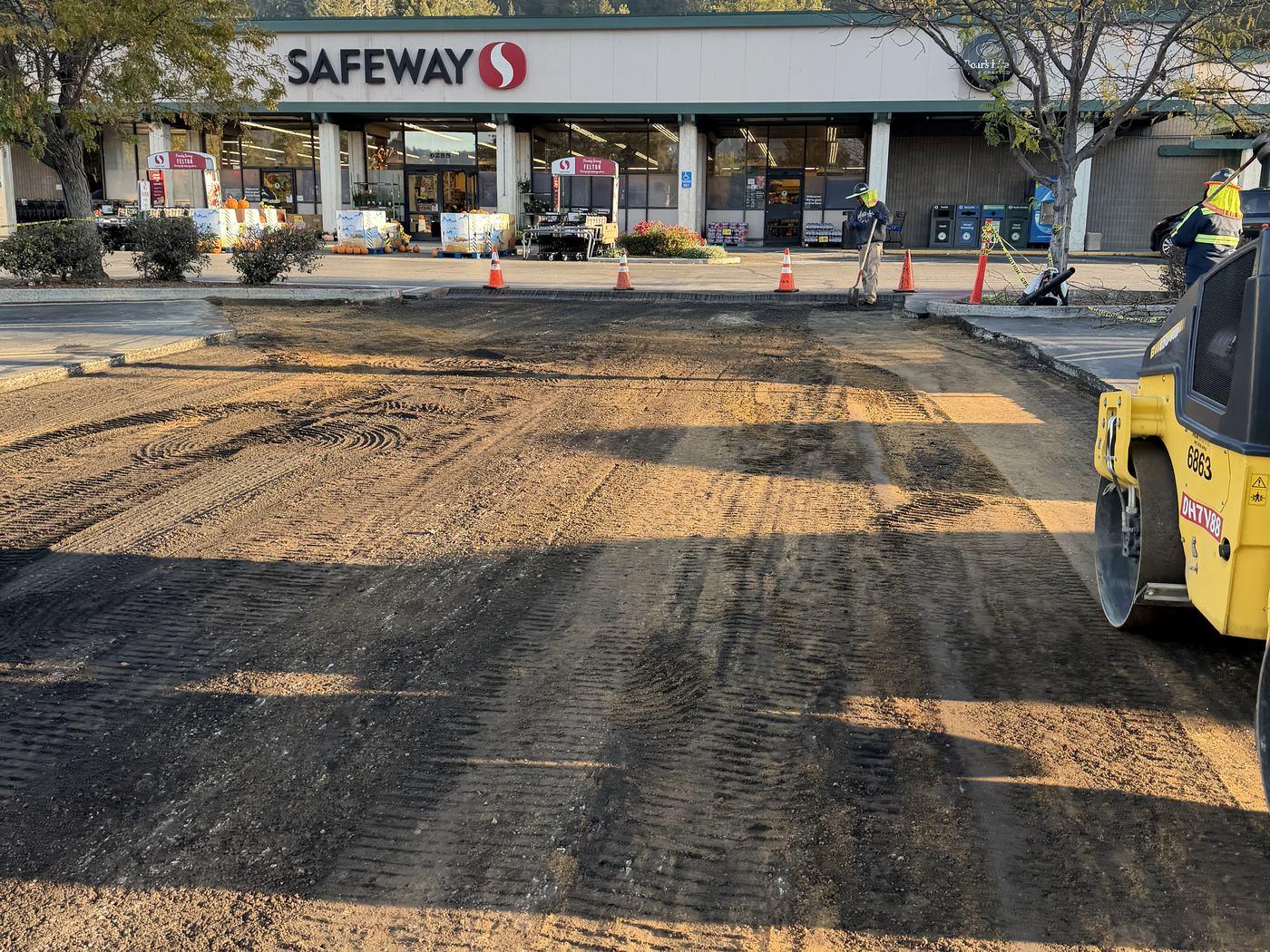
Under a driveway that lasts, there's subgrade cut and compacted to density, and base rock placed and compacted again — a foundation built lift by lift. It's not glamorous and it doesn't photograph well, and when it's done right, you will never think about it again. That's the point. It's also where the pipe and conduit go, while the ground is open — trench it now or cut a finished driveway later.
So when you compare bids, look for the base-prep line. If it isn't there, the bid isn't cheaper — it's just shorter.
“Asphalt doesn't fail from the top down. It fails from the bottom up.”
Ready when you are.
Call, or send the job through the estimate form — Santana answers, seven days a week.