
What an Asphalt Driveway Really Costs in Santa Cruz County
Every week somebody calls and asks what a driveway costs. The honest answer is a range, and I know that's not the answer anyone wants. But the range isn't mysterious — it comes down to a handful of things, most of which you can see standing on your own porch.
What moves the number
Size and access. Pavement is priced by area, but access decides how much of the work is machine and how much is muscle. A straight, open driveway the trucks can reach is one job; a narrow lane under redwoods with a gate and a septic line is another.
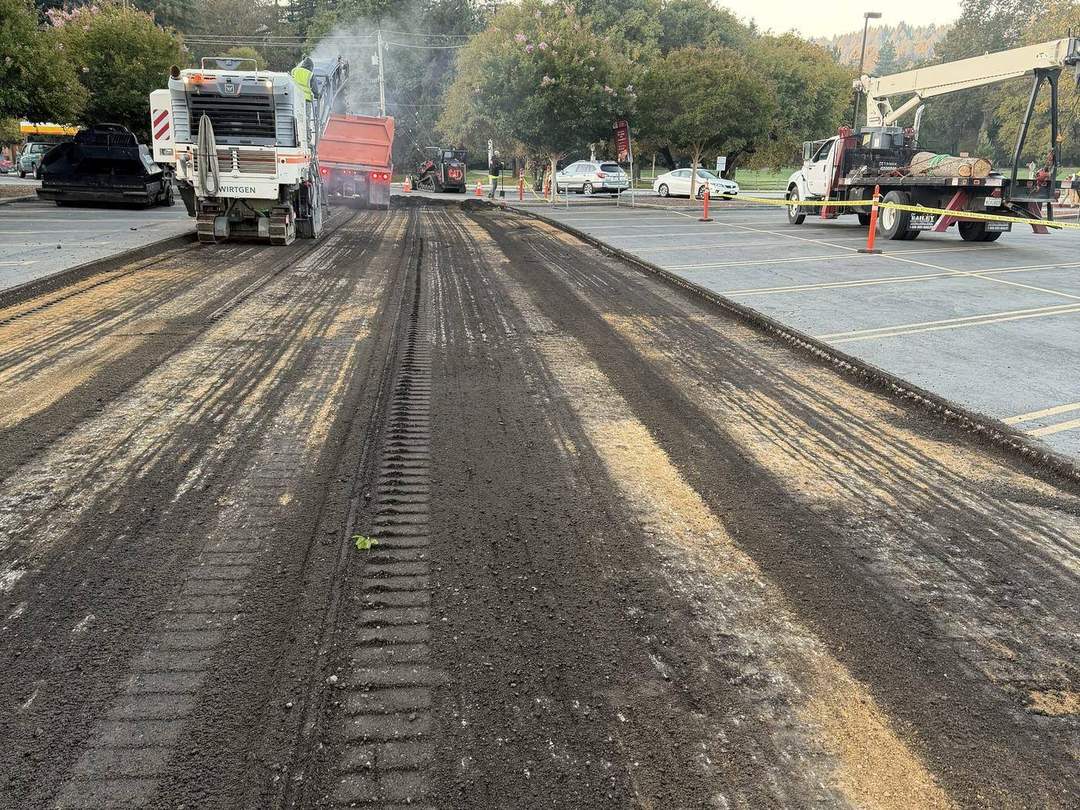
What's under the old surface. Asphalt is only as good as its base. If the rock under your driveway is sound, we can work with it. If the base has failed — soft spots, pumping, roots — it has to be rebuilt, and that's grading and excavation, not paving. This is the single biggest reason two bids for the same driveway can be far apart.
Water. Drainage decides how long the driveway lasts, and fixing it is cheaper before the mat goes down than after. If water sits on it or runs under it, that gets solved first.
Thickness and mix. Two inches of asphalt is not three inches of asphalt, and they don't cost the same — or last the same. When you compare bids, compare the spec, not just the bottom line.
How to get a real number
Get more than one bid, and make every bidder put the same things in writing: base prep, mat thickness, mix, drainage, and the warranty. We walk the job, measure it, and price it straight — what it takes to do it right, in plain terms. The estimate costs you nothing, and it's a real number, not a range.
“The cheapest bid is usually the thinnest mat. Ask what's under it.”
Ready when you are.
Call, or send the job through the estimate form — Santana answers, seven days a week.